
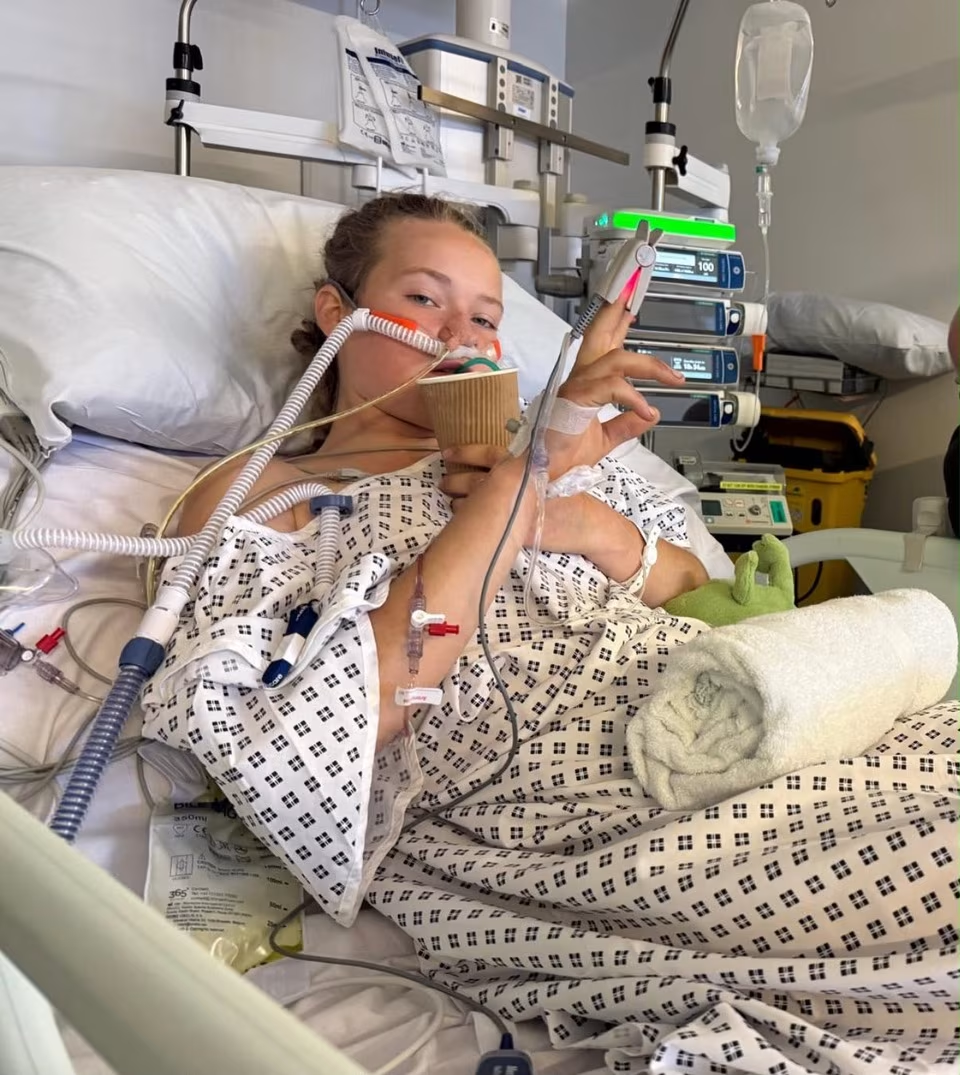
In late June of 2025 17-year-old Northumberland event rider Lucy Henderson was preparing to compete in the BE100 class at Alnwick Ford Horse Trials. Instead, a rotational fall while cross-country schooling changed the course of her season and marked the beginning of a long and challenging recovery.
Lucy had been schooling to build confidence ahead of the event when her horse Peapod left a leg at a coffin fence, resulting in a rotational fall. Thankfully, her horse was unharmed, but Lucy immediately knew she had been seriously injured.
“I had multiple breaks to my ribs and lower vertebrae, a broken shoulder and internal injuries to my lungs and left kidney.”
An air ambulance was called to the scene, and, after initial treatment, Lucy was transported by road to the Royal Victoria Infirmary in Newcastle. She spent six days in the High Dependency Unit undergoing conservative treatment to control internal bleeding, followed by a further three days under observation on a general ward before continuing her recovery at home with her family.
As the weeks passed, it became clear that Lucy’s hospital stay was only the first stage of her recovery. Alongside the physical injuries, she was dealing with the emotional impact of a traumatic accident and the uncertainty surrounding her future in the sport. The accident also resulted in the loss of sight in her left eye, adding another significant challenge to her recovery.
Lucy and her father, Matt, were aware of the British Eventing Support Trust through Lucy’s British Eventing membership and contacted the charity for support. Help was arranged quickly, including sessions with a local sports physiotherapist and hydrotherapy to help rebuild core and spinal strength.
“When we first spoke with the two Janes at the British Eventing Support Trust, I wasn’t ready to start pool therapy yet, but even knowing it was coming down the tracks helped enormously,” says Lucy.
Recognising the impact the accident had had on her mental health, Lucy also began a programme of counselling sessions funded by the charity. As with all support provided by the British Eventing Support Trust, the service was tailored to her individual needs, including a change when Lucy found she didn’t gel with her first trained therapist.
“I shared my feedback with Jane and was soon linked up with a lady who understood horses – and riders – far better, and I started getting a lot more out of the sessions.”
By August 2025, Lucy had made sufficient progress to return to work, albeit in a different role from before her accident. Around the same time, she also sat on a horse again for the first time.
“It was an easy and very chilled, quiet cob – definitely not a fit event horse!”
When we spoke in June 2026, Lucy was still undergoing treatment for ongoing shoulder issues and awaiting further surgery relating to her kidney injury. Despite this, she had returned to work at the event yard and was aiming to be back competing before the end of the season, most likely starting with dressage.
Earlier in the year, Lucy visited the British Eventing Support Trust stand at Belsay International Horse Trials, giving her the opportunity to meet in person some of the people, including Jane Rudd, who had played such an important role in her recovery. Her advice to any rider facing a serious injury is simple:
“Don’t be afraid to ask for help. Riders are so stoic and always try to tough things out, but it isn’t always possible to go it alone. Having the support of the British Eventing Support Trust made all the difference after my accident.”