
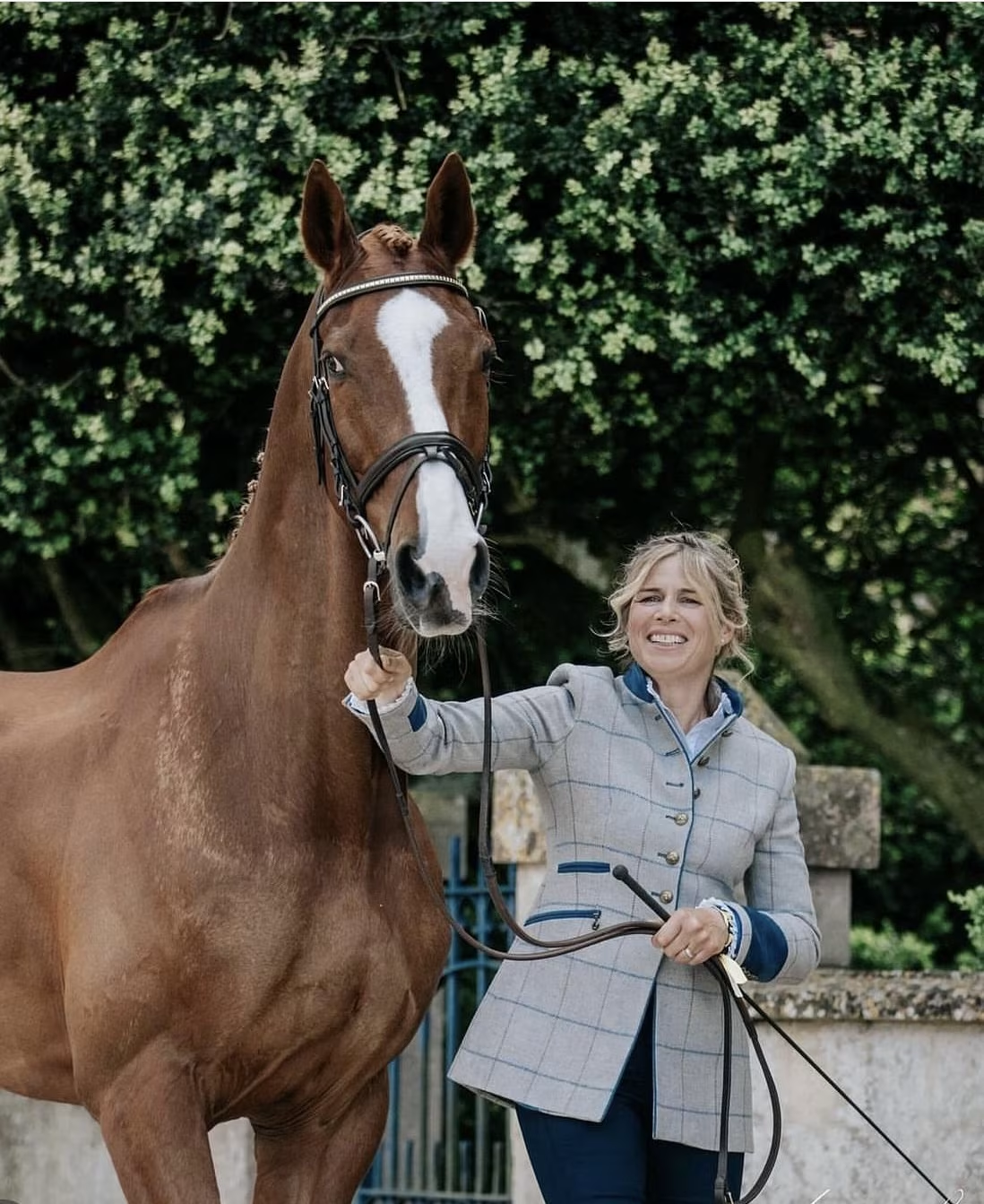
Advanced event rider and coach Helen Martin has spent years producing young horses and competing at the highest levels of the sport. Falls and injuries are an unfortunate part of eventing, and Helen has broken bones before. But when she suffered a serious accident at Moreton Morrell Horse Trials in May 2025, she quickly realised this was very different.
Helen was riding the then seven-year-old mare Wheelagower Shes The One, known at home as Lottie, a horse she had produced herself from a four-year-old. After a string of promising BE100 runs and schooling over novice courses, the pair were stepping up to Novice level together.
Following a good dressage test and a clear show jumping round, everything was going to plan until one split second on the cross-country course.
“Lottie is a very genuine mare, but she just went a little spooky coming round a blind turn to a corner,” Helen recalls. “The fence took her by surprise, she misjudged the width of it, hit the back rail and we rotated.”
Horse and rider both fell heavily. Lottie was taken away for veterinary treatment, where it was found that she had sustained fractures to the transverse processes in her neck, while Helen was left on the floor and struggling to breathe from crush injuries.
Helen was taken to Warwick Hospital, where scans revealed a lacerated liver, bruised lungs, multiple broken ribs and a large haematoma on her leg. Doctors were initially concerned she might have compartment syndrome, while further CT scans assessed the extent of her internal injuries.
“It was very scary because I ended up in resuscitation at one point due to a possible reaction to the contrast dye. I was in a huge amount of pain, and it was frightening. I’ve shattered my knee before, broken my wrist and dislocated my shoulder, but this was different.”
After being transferred to University Hospital Coventry, Helen spent a further couple of days in hospital before being discharged. Physically, she was beginning the road to recovery, but emotionally she was still processing just how serious the accident had been.
“The morning after I got home, British Eventing rang to check I was okay, and Jane Rudd from the British Eventing Support Trust called as well. I just burst into tears because I was still in a state of shock.
“I realised how serious it could have been.”
Helen had previously received support from the British Eventing Support Trust following a dislocated shoulder, so she and Jane had spoken before. This time, however, Jane immediately recognised that Helen needed something different.
“She said, ‘You sound very different to how you did when I spoke to you in October, and I think you’ll need some help psychologically to get over this.’ She said she would organise counselling sessions for me when I felt ready.”
Initially, Helen wasn’t convinced she needed them.
“My first reaction was, ‘I’ll be fine.’ But actually, I wasn’t in a good place.”
The timing made everything feel even harder. The accident came just before Badminton Horse Trials, where Helen had competed the previous year.
“I remember thinking, ‘This time last year I was there, and now I’m not.’ My five-star horse had retired due to injury, and I was battered, bruised and feeling really fragile about everything.”
The counselling sessions soon became a turning point.
“They helped me reassess everything and gave me the support I needed mentally to deal with the shock of what had happened and prepare me to get back on a horse.”
“I genuinely don’t think I could have done it without them. The help the British Eventing Support Trust gave me was instrumental in helping me get back competing as smoothly as possible.”
One question from the sports psychologist has stayed with Helen ever since.
“She asked me, ‘Who are you doing this sport for? Are you doing it to please other people or are you doing it to please yourself?’ That really resonated with me. I realised I’m doing it because I love it. It doesn’t matter whether I’m riding at Badminton or somewhere else, I just want to go out and enjoy every event. When you have a near miss, you appreciate so much more what’s around you and what you’ve got. You appreciate the good days far more.”
As both a rider and coach, Helen believes the mental side of recovery is often overlooked.
“A huge part of riding is confidence. If you’re not confident, the horse feels that. The support I received helped me regain that confidence and it’s something I work on with coaching clients too.
“I think it’s easy to forget about mindset because we’re all so busy trying to fit everything in. But those sessions still stay with me now. Sometimes I’ll be out hacking on my own and I’ll find myself thinking back to what we talked about.”
The experience has also strengthened Helen’s partnership with Lottie, who has made a successful return to competition and is now competing at Novice level, with hopes of stepping up to her first international.
Later that season, Helen had the opportunity to thank Jane in person when she visited the British Eventing Support Trust stand at Tetworth Horse Trials. Competing one of her husband’s young horses, she finished fifth in the Novice class and found herself putting many of the techniques she had learned through the sports psychology sessions into practice.
“That horse has challenged me, but I harnessed all the tools I’d been taught, and we had a great result. It was just a really lovely way to finish the season, and it made me reflect on how lucky I was and what a very different end to the season it could have been.”
Looking back, Helen hopes other riders won’t underestimate the importance of looking after their mental wellbeing following a serious accident.
“Jane was incredibly kind and empathetic, and she reminded me to be kind to myself too. You question yourself after something like that, asking whether you could have done anything differently, if the horse was really ready, but sometimes accidents are simply out of your control. The support I received helped me move forwards instead of getting stuck asking why, and that made all the difference.”